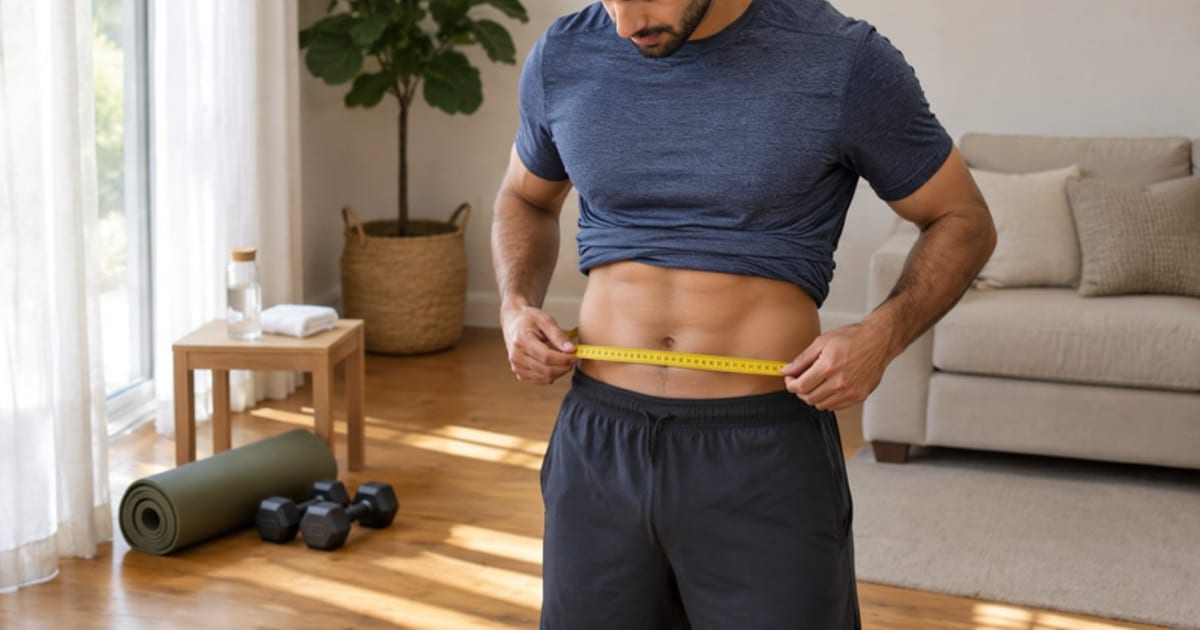
Can two people have the same weight and height and still look completely different and have completely different fitness levels? Absolutely! The reason may be the difference in their body fat percentage and muscle mass.
The number on the scale alone doesn't reflect the truth about your body composition, and a lower weight doesn't necessarily mean a lower body fat percentage. So if you want to lose weight, build muscle, or improve your fitness, it's important to understand your body fat percentage, how to measure it, and which percentages count as normal and healthy.
In this article, we go through the most important things you need to know, and how FTW's tools help you track your progress and reach your fitness goals.
What Is Body Fat Percentage?
Body fat percentage is the share of your total body weight that is fat, expressed as a percentage.
Put simply, if you weigh 80 kilograms and your body fat percentage is 25%, your body contains about 20 kilograms of fat.
Body fat falls into two main types:
- Essential fat: the fat your body needs to keep its vital functions going, such as regulating hormones, protecting organs, and absorbing some vitamins.
- Stored fat: the fat your body keeps as a source of energy; it builds up in the fatty tissue under the skin and around some organs.
It's important to know that having fat isn't a bad thing; your body needs a suitable amount of it to work normally. The problem starts when the percentage rises too much or drops to unhealthy levels.
What Is a Normal Body Fat Percentage?
A normal body fat percentage varies with sex, age, and activity level, and the classifications used differ slightly between organizations and scientific references.
As a rough guide, you can use the following ranges for adults:
| Category | Men | Women |
|---|---|---|
| Essential fat | 2–5% | 10–13% |
| Athletes | 6–13% | 14–20% |
| Fitness | 14–17% | 21–24% |
| Acceptable average | 18–24% | 25–31% |
| High | 25% or more | 32% or more |
These ranges are guidance, not fixed diagnostic cut-offs, and age also affects how a suitable body fat percentage is interpreted.
Note too that women naturally have a higher body fat percentage than men because of biological and hormonal differences and the body's physiological needs.
How Can You Calculate Your Body Fat Percentage?
There are several ways to estimate body fat percentage, which differ in accuracy, cost, and ease of use. The most notable are:
1. Body Fat Percentage Formulas
There are formulas that use some body measurements, such as height, weight, and waist, neck, and hip circumference, to estimate your body fat percentage.
This method is suitable for getting an initial estimate without specialized devices, but it doesn't give a direct measurement of fat.
2. Body Composition Analyzers (BIA)

These devices pass a very weak electrical current through the body, measure how much the tissues resist it, and then use the data to estimate your body fat percentage, muscle mass, and other body components.
They're easy to use, but their results can be affected by how hydrated you are, eating, exercising, and the timing of the measurement.
3. Skinfold Measurement

A special tool is used to measure the thickness of the fat under the skin at specific sites on the body, and then certain formulas are used to estimate your total body fat percentage.
The accuracy of this method depends on the experience of the person taking the measurement and on the formula used.
4. DEXA Scan
Dual-energy X-ray absorptiometry (DEXA) is one of the advanced methods for analyzing body composition: it helps estimate fat and fat-free mass and how they're distributed across different areas of the body.
Even so, results can differ between measurement methods and devices, so it's best to track changes with the same method as far as possible.
What Is the Difference Between Body Fat Percentage and Body Mass Index (BMI)?
Although both measures are used to assess weight, there's an important difference between them.
The body mass index (BMI) relies on the relationship between weight and height, without telling fat and muscle apart.
Body fat percentage, on the other hand, focuses on how much fat you have compared with your total weight, so it can give extra information about your body composition.
For example, two people may have a similar body mass index, but one of them has more muscle mass and a lower body fat percentage than the other.
So it's best to use both measures together, along with waist circumference and other health markers, for a more complete assessment.
Frequently Asked Questions
What does body fat percentage mean?
It's the share of your total body weight that is fat, expressed as a percentage. If you weigh 80 kilograms and your body fat percentage is 25%, your body contains about 20 kilograms of fat.
What is a normal body fat percentage for men and women?
As a rough guide, the acceptable average is between 18% and 24% for men and between 25% and 31% for women. These ranges are guidance, not fixed diagnostic cut-offs, and age affects how they're interpreted.
Why do women have a higher body fat percentage than men?
Women naturally have a higher body fat percentage than men because of biological and hormonal differences and the body's physiological needs.
What is the most accurate way to measure body fat percentage?
A DEXA scan is one of the advanced methods for analyzing body composition. Even so, results can differ between measurement methods and devices, so it's best to track changes with the same method as far as possible.
What is the difference between body fat percentage and body mass index?
The body mass index relies on the relationship between weight and height without telling fat and muscle apart, while body fat percentage focuses on how much fat you have compared with your total weight. It's best to use both measures together.
How Does FTW Help You Reach Your Target Body Fat Percentage?
If your goal is to lose fat or improve your body composition, knowing your starting point helps you set a more realistic plan.
With FTW's tools, you can use the calorie calculator to estimate your daily energy needs and set the right calories for your goal and activity level.
You can also use the body mass index (BMI) calculator to assess your weight relative to your height, and then use this information to track the changes in your body over time.
And don't forget that reaching a healthy body fat percentage doesn't depend on cutting food at random; it takes a balanced diet that covers your protein and nutrient needs, along with resistance training and regular physical activity.
Most importantly, track your progress with a set of measures, such as weight, waist circumference, muscular strength, and body fat percentage, instead of focusing on a single number.
Summary
Body fat percentage is one of the important measures for understanding your body composition and assessing your progress toward your fitness goals. The normal percentage varies with sex and age, and there are many ways to measure it, from formulas to specialized devices and medical scans.
If you want to improve your physique, lose fat, or build muscle, don't let the scale be your only way of judging your results. Pay attention to your body composition and your overall health, and use FTW's tools to work out your needs and build a plan that helps you reach your goals in a healthy, sustainable way.
This article is for general education and doesn't replace a medical assessment. Consult your doctor before any major change to your weight or diet, especially if you have a health condition or are pregnant.
Sources
- American Council on Exercise (2014). ACE Personal Trainer Manual (5th ed.). General body-fat percentage categories (essential fat, athletes, fitness, average, obese).
- Kyle UG, et al. (2004). Bioelectrical impedance analysis—part I: review of principles and methods. Clinical Nutrition, 23(5), 1226–1243. doi:10.1016/j.clnu.2004.06.004
- Romero-Corral A, et al. (2008). Accuracy of body mass index in diagnosing obesity in the adult general population. International Journal of Obesity, 32(6), 959–966. doi:10.1038/ijo.2008.11