If you have recently decided to make exercise part of your life, good news: this is one of the best decisions you will ever make. In this article you will find a complete gym workout schedule for beginners for 3 days a week: each day with its exercises, sets, reps, and rest time, plus a plan that tells you when to add weight week after week. This is a simple 3-day gym workout plan, full body in every session, and printable so you can take it with you to the gym.

What is the best gym workout schedule for beginners?
The best gym workout schedule for beginners is a "full body" program 3 days a week, with a rest day between every two sessions. Each session has 6 basic exercises for the legs, chest, back, shoulders, arms, and abs, done for two or three sets of 8 to 15 reps, with the weight increased gradually every week or two.
Before you start: 5 basic rules for your workout schedule
First, let's agree on a few simple rules that make any beginner gym program work for you safely:
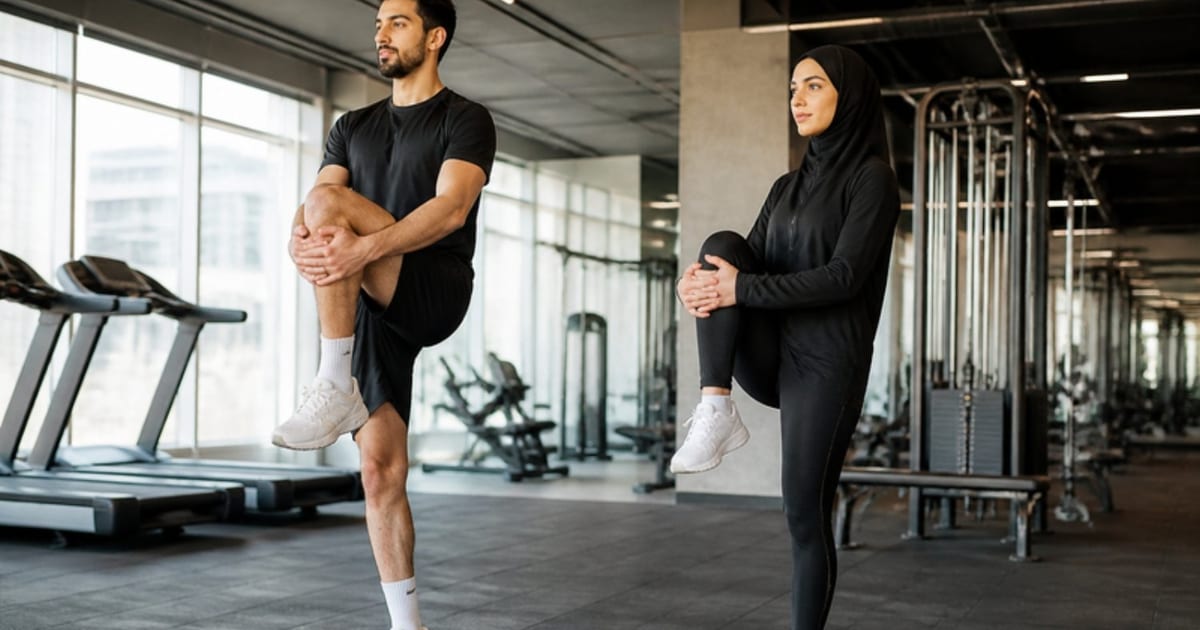
- Warm up before every session: 5 to 10 minutes on the treadmill or stationary bike, then one light set of the first exercise. What matters is that you feel your body has warmed up and is ready to train.
- Stretch after your workout: 5 minutes of light stretching for the muscles you trained. It helps you relax and cool down after the session.
- A rest day between every two sessions: for example Saturday, Monday, and Wednesday, or Sunday, Tuesday, and Thursday. Muscle recovery is just as important as the workout itself.
- Listen to your body: don't lift a weight much heavier than you can handle, and don't go so light that it won't get you to your goal. We explain the right weight in detail in the next section.
- Water and food: drink water before, during, and after your workout, and eat a meal with protein after training. The details are in our article on eating before and after your workout.
If you have a specific health condition (high blood pressure, diabetes, joint or back pain) or a previous injury, talk to your doctor before starting any exercise program.
3-day gym workout plan for beginners: Day A, Day B, and Day C
We will split the schedule across three days a week and call them Day A, Day B, and Day C. Each day trains the whole body (legs, chest, back, shoulders, arms, abs), but with different exercises. That way every muscle is trained 3 times a week without wearing out the same movement every time.
Day A (for example, Saturday)
Pick this day however it suits you. What matters is choosing a day that fits your schedule and when you feel most motivated, then doing the following exercises:
| Exercise | Sets | Reps | Rest | Note |
|---|---|---|---|---|
| Dumbbell squat (goblet squat) | 3 | 8–10 | 2 minutes | Keep your back straight and go down until your thighs are roughly parallel to the floor |
| Dumbbell bench press | 3 | 8–10 | 2 minutes | Elbows at about 45 degrees from your body |
| Seated cable row | 3 | 10–12 | 90 seconds | Pull with your elbows, back steady, no swinging |
| Seated dumbbell overhead press | 2 | 10–12 | 90 seconds | Keep your back against the pad |
| Cable triceps pushdown | 2 | 12–15 | 60 seconds | Elbows fixed at your sides |
| Plank | 3 | 20–30 seconds | 45 seconds | Body in a straight line from head to heels |
Day B (for example, Monday)
Keep the momentum going and do the Day B exercises. On top of that, log the weights you used for each exercise, on paper or in the FTW Fitness app, so you know where to start next week.
| Exercise | Sets | Reps | Rest | Note |
|---|---|---|---|---|
| Dumbbell Romanian deadlift | 3 | 8–10 | 2 minutes | Move from the hips with your back straight the whole time |
| Leg press | 3 | 10–12 | 90 seconds | Don't fully lock your knees at the top |
| Lat pulldown | 3 | 10–12 | 90 seconds | Pull the bar to your upper chest, not behind your neck |
| Incline dumbbell press | 3 | 10–12 | 90 seconds | Bench at about 30 degrees |
| Dumbbell biceps curl | 2 | 12–15 | 60 seconds | Don't swing your body to lift the weight |
| Dead bug | 2 | 10 per side | 45 seconds | Lower back pressed into the floor |
Day C (for example, Wednesday), the last one this week
This is the day that, once you finish it, you've earned the right to reward yourself and say: well done for sticking with it.
| Exercise | Sets | Reps | Rest | Note |
|---|---|---|---|---|
| Dumbbell lunges | 3 | 8–10 per leg | 90 seconds | Front knee over your foot, not going far past it |
| Chest press machine | 3 | 10–12 | 90 seconds | Push with control and return slowly |
| One-arm dumbbell row | 3 | 10–12 per arm | 90 seconds | Pull the dumbbell toward your hip, not your chest |
| Dumbbell lateral raise | 2 | 12–15 | 60 seconds | Light weight, elbows slightly bent |
| Glute bridge | 3 | 10–12 | 60 seconds | Squeeze your glutes at the top for one second |
| Side plank | 2 | 20 seconds per side | 45 seconds | Hips lifted in one line with your shoulders |
How do you choose the right weight in your workout schedule?
Sets: the number of times you repeat the exercise. Reps: the number of times you perform the movement in a single set. Rest: the time between one set and the next.
The golden rule for choosing the weight: pick a weight you can do all the reps with using good form, and at the end of the set you feel you could have done two or three more reps. If you finish the set and could do 6 more reps, the weight is too light. If your form breaks down before the last rep, the weight is too heavy.
So in your first session, start with a very light weight and raise it gradually from set to set until you reach the right weight, then write it down.
Weeks 1 to 4 of a beginner gym workout program: when do you add weight?
Don't try to add weight every session. Follow this simple progression:
| Week | Sets | Effort | What to do |
|---|---|---|---|
| 1 | Two sets per exercise | Easy (you could do 4 more reps) | Learn proper form and find your starting weight |
| 2 | As in the schedule | Moderate (3 more reps) | Keep the weights steady and try to add one rep |
| 3 | As in the schedule | 2–3 more reps | If you reach the top of the rep range in all sets: add 2.5 kg for upper body and 5 kg for legs |
| 4 | As in the schedule | Two more reps | Keep following the same rule and review your log: have your weights gone up? |
This method is called "progressive overload": a small, regular increase in weight or reps, and it is the foundation of any successful beginner gym workout program [1].

Why 3 days? A quick comparison of gym workout splits
You may have heard, for example, of splitting your gym workouts so you train one muscle each day. This split usually doesn't suit a beginner, because a scientific review published in Sports Medicine found that training a muscle at least twice a week is better for building it than once a week [2]. If you want the full comparison between the different systems, read our guide to choosing the right gym workout split for you.
| System | Days per week | How often each muscle is trained | Suitable for |
|---|---|---|---|
| Full body (this schedule) | 3 | 3 times | Beginners and people short on time |
| Upper / lower | 4 | Twice | After 2–3 months of consistent training |
| One muscle per day | 5–6 | Once | Usually not suitable for beginners |
A short guide to the main exercises
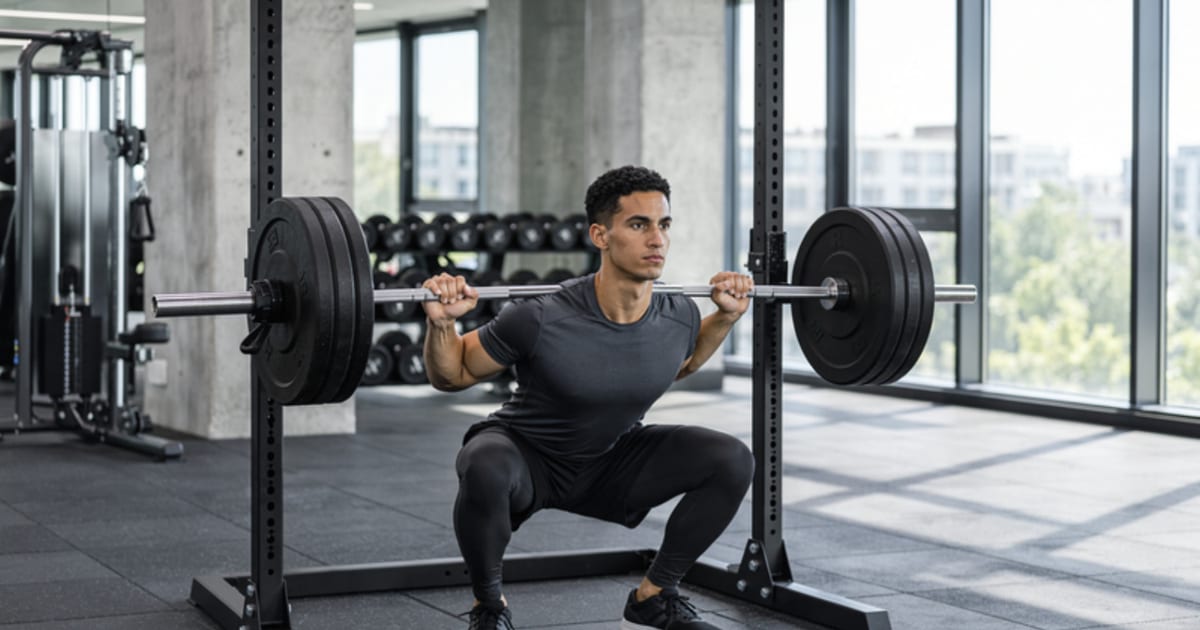
- Squat: feet shoulder-width apart, go down as if you are sitting on a chair, with your knees pointing in the direction of your toes.
- Bench press: shoulder blades squeezed together on the bench, lower the weight slowly until it is close to your chest, then push.
- Romanian deadlift: push your hips back with your knees slightly bent, and lower the dumbbells close to your legs until you feel a stretch in the back of your thighs.
- Lat pulldown and rows: start the movement by squeezing your shoulder blades together, then pull with your elbows, not your hands.
- Plank: rest on your forearms, brace your abs and glutes, and don't let your hips sag.
After 8 weeks: from a beginner program to a bodybuilding workout schedule
If you stick with this schedule for about 8 weeks, your weights have gone up, and you know the exercises by heart, you are ready to move to a 4-day split (upper / lower), and later to a more specialized bodybuilding workout schedule based on your goal. On the other hand, if you can't get to the gym right now, start with the 4-week home workout program for beginners, and come back to this schedule later.
And because every body is different, you can start by analyzing your body for free to find your starting point and the right goal for you:
Analyze your body for free
Frequently Asked Questions
Is a 3-day gym workout plan enough for a beginner?
Yes. Three full-body sessions a week train each muscle 3 times, which is more than enough to build strength and muscle in the first months, with enough time to rest between sessions.
How do I choose the right weight in the first week?
Start with a very light weight and raise it from set to set until you reach a weight you can finish the required reps with while feeling you could have done two or three more. Write that weight down so you can start from it in the next session.
Is there a printable gym schedule PDF?
Yes, the schedule in this article is designed to be printed on a single A4 sheet. Print it, take it with you to the gym, and write the weight you used next to each exercise.
What should I do if I miss a workout day?
Don't make it up by doing two sessions in one day. Pick up where you left off on the next available day. What matters is staying consistent over the long term, not being perfect every week.
Should I do cardio with a beginner gym program?
You can add 10 to 20 minutes of brisk walking or cycling after your weights, or on your rest days. Cardio is good for your heart and fitness, but don't let it eat into your energy for strength training.
Is this program suitable for women?
Yes, the same exercises and rules work for both men and women. The only difference is the starting weights, which depend on each person's ability.
Conclusion
In short, this schedule is a starting point for your fitness journey: 3 full-body days, the right weight, and a gradual increase every week. Stick with this beginner gym workout schedule for 8 weeks, log your weights, and don't stop; results come with consistency.
And if you want someone to follow along with you every day, the FTW Fitness app for gym enthusiasts builds today's session from your plan, adjusts its intensity based on your recovery level and sleep, and lets you log your weights and exercises. Download it for free and start your first session today:
Download FTW Fitness for free
Sources
- American College of Sports Medicine. Progression Models in Resistance Training for Healthy Adults. Medicine & Science in Sports & Exercise, 2009.
- Schoenfeld BJ, Ogborn D, Krieger JW. Effects of Resistance Training Frequency on Measures of Muscle Hypertrophy: A Systematic Review and Meta-Analysis. Sports Medicine, 2016.
This has been the FTW Sports & Wellness team, with you, dear reader and strong trainee. If you try this schedule, message us and tell us how it went; we'd be happy to hear from you.