Have you decided to start working out at the gym, but you don't know where to begin? Do you feel lost in front of all the different machines, wonder which exercises suit your level, or worry about making mistakes that will hurt your results?
No need to worry! At FTW, we're always with you until you reach your goal. Every professional athlete was a beginner at some point, and the real difference isn't where you start, but taking the right steps and sticking with them.
In this guide, you'll learn how to start going to the gym step by step, the best gym exercises for beginners, how to choose a suitable training schedule, how to use weights correctly, and how to make noticeable progress without exhausting your body from the very first days.

How to Start Going to the Gym: 7 Steps to Start Right
If you're asking yourself, "How do I start at the gym the right way?", the answer isn't lifting heavy weights from day one or trying every machine available. It's setting up a simple training plan that fits your level and your goals.
1. Define your fitness goal
Before you start training, decide what result you want to achieve, because your goal will shape which training program you choose and how it's organized.
- Fat loss: relies on combining resistance training, regular physical activity, and a suitable diet that helps you create a moderate calorie deficit.
- Muscle building: requires regular resistance training, gradually increasing the load, and eating enough protein and energy.
- Building physical strength: requires training the basic movements and improving your performance gradually, while increasing weights in a planned way.
- Improving overall fitness: can be achieved by combining resistance training with aerobic exercise, such as brisk walking and cycling. The World Health Organization recommends that adults get 150–300 minutes of moderate aerobic activity per week, along with resistance training on at least two days [1].
You can combine more than one goal, but setting a priority helps you choose the most suitable program and track your progress clearly.
2. Choose the right number of training days for you
A common beginner mistake is starting with six training days a week, then feeling exhausted or losing motivation because it's hard to keep up.
It's better to start with a number of days you can stick with, such as two or three days a week, and to arrange your sessions so your muscles have time to recover.
Full-body training three times a week is a practical option for many beginners, since it lets you train the major muscle groups regularly without spending long hours at the gym.
3. Learn the exercises before adding weight
At the start of your fitness journey, your main goal should be mastering the movement and controlling the weight, not lifting the heaviest weight possible.
Ask a qualified trainer to show you how to use the machines, adjust the seats, and choose the right body position. Start with a weight that lets you complete the required reps while staying in control of the movement.
Remember: correct form matters more than the weight you lift. If you have to swing or lose control of the movement to finish the exercise, it's better to lower the weight.
4. Warm up before you train
A warm-up helps prepare your body for physical effort gradually and gives you a smoother transition from rest to activity.
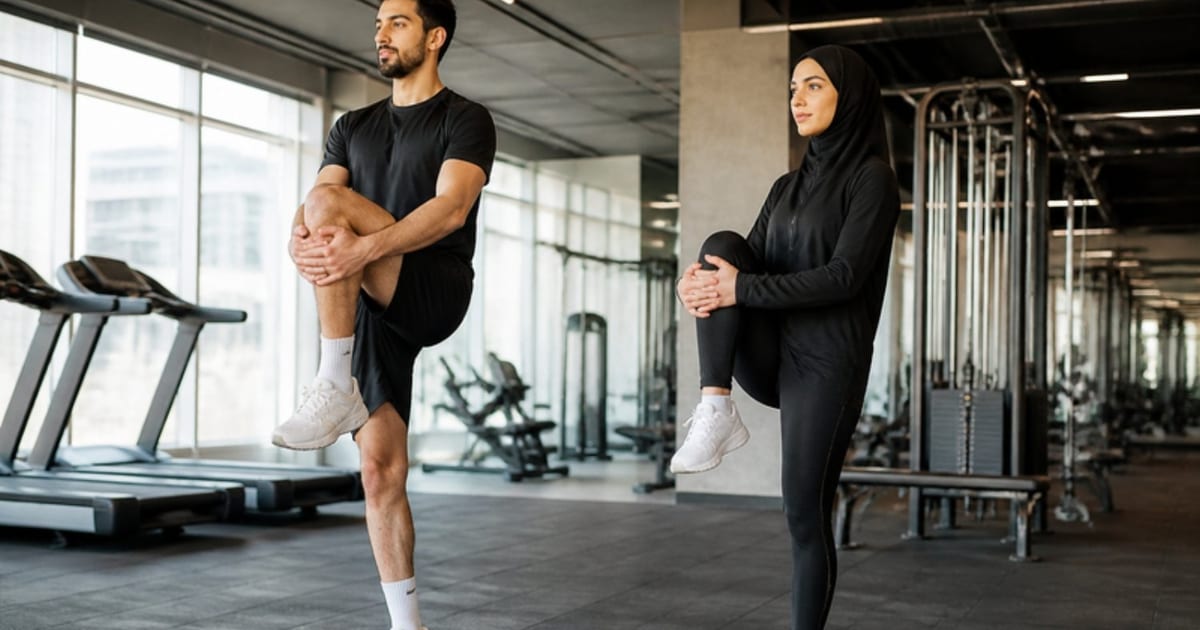
You can start with five to ten minutes of walking or riding a stationary bike at light to moderate intensity, then do warm-up movements suited to the muscles and joints you're about to train. You'll find the full warm-up steps in our guide to warming up and stretching before a workout.
You may also need to do a light warm-up set before your main sets, especially for exercises that demand more effort.
5. Choose simple, full-body exercises
You don't need to try every machine in the gym during your first week. It's enough to learn a set of exercises that target the body's main muscles, such as the legs, chest, back, shoulders, arms, and core.
Start with exercises that suit your level and mobility. Machines can be a good choice at first because they help keep the movement path stable in many exercises, but you still need to learn how to adjust and use them correctly.
6. Pay attention to nutrition and sleep
Training alone isn't enough to get the best results. Your body needs proper nutrition and enough sleep to recover and adapt to the physical effort.
Make sure to eat protein sources, such as eggs, chicken, fish, and legumes, along with vegetables, fruits, and sources of carbohydrates and healthy fats.
Adults are also advised to get seven to nine hours of sleep per night [3], keeping in mind that individual needs and health conditions differ.
7. Track your progress and don't compare yourself to others
Log the exercises you do, the weights you use, and the number of reps in each session. This will help you notice your progress and know when it's the right time to increase your training load.
Don't make comparing yourself to others your measure of success. Everyone has a different level of fitness, experience, and ability to recover.
Remember that results depend on a combination of factors, including consistent training, nutrition, sleep, and your health status.
Gym Exercises for Beginners: What Are the Best Exercises to Start With?
Gym exercises for beginners are an effective way to build strength and improve fitness, as long as you choose the right exercises and learn to perform them correctly.
Below is a set of exercises you can draw on when putting together your training program.
First: Lower-body exercises
1. Leg Press
This exercise targets the thighs and glutes, and it can be suitable for beginners when the machine is adjusted properly, a comfortable range of motion is chosen, and the weight is controlled.
2. Goblet Squat
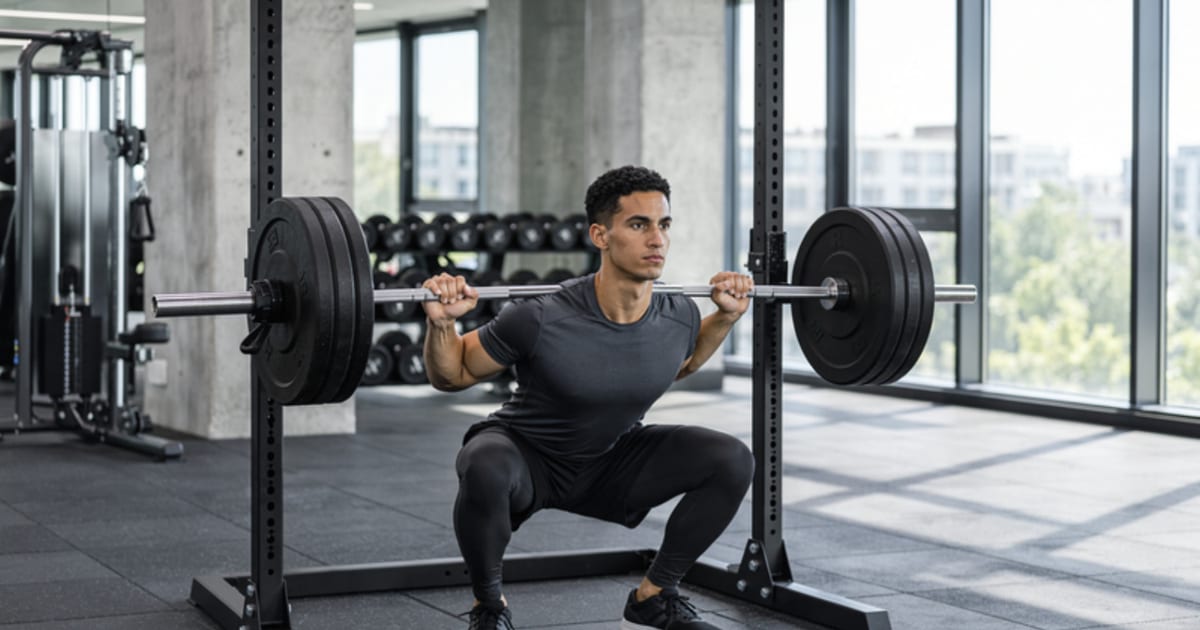
The squat helps strengthen the legs and glutes and improves your ability to perform everyday movements. You can start without weights until you master the movement.
3. Leg Curl
This targets the hamstrings (back of the thigh). You can do it on the dedicated machine, while avoiding weights heavier than you can control.
Second: Upper-body exercises
4. Chest Press
This targets the chest muscles, with help from the front shoulder muscles and the triceps.
5. Lat Pulldown
This helps strengthen the back and arm muscles. To do it correctly, pull the handle with control and avoid excessive swinging of your torso.
6. Seated Row
This targets the back muscles and helps you improve control of the pulling movement. Keep a good torso position and avoid using momentum to finish your reps.
7. Shoulder Press
This targets the shoulders and triceps. It's best to start with a light weight and a comfortable range of motion, especially for people with previous shoulder problems.
Third: Ab and core exercises
8. Dead Bug
This helps improve control of your core muscles and coordination between your arms and legs, and it can be done without weights.
9. Plank
This helps strengthen your core. Start with a short hold while keeping your body straight, then increase the time gradually based on your ability.
Beginner gym exercises summarized in one table
| Exercise | Main muscle | Equipment | Quick tip |
|---|---|---|---|
| Leg press | Thighs and glutes | Machine | Don't lock your knees at the top |
| Goblet squat | Thighs and glutes | One dumbbell | Start without weight |
| Leg curl | Hamstrings | Machine | Control the lowering phase |
| Chest press | Chest and triceps | Machine | Handles at mid-chest |
| Lat pulldown | Back and biceps | Cable machine | Don't swing your torso |
| Seated row | Mid-back | Cable machine | Keep your back straight |
| Shoulder press | Shoulders | Dumbbells or machine | Light weight, comfortable range |
| Dead bug | Core | Floor | Lower back pressed to the floor |
| Plank | Core | Floor | Body in a straight line |
You'll find detailed form instructions in our guides to chest exercises and back exercises.
You don't have to do all of these exercises in a single session. You can pick a suitable selection and spread them across your training days based on your goals and level.
Your First Week at the Gym: A 3-Session Full-Body Template
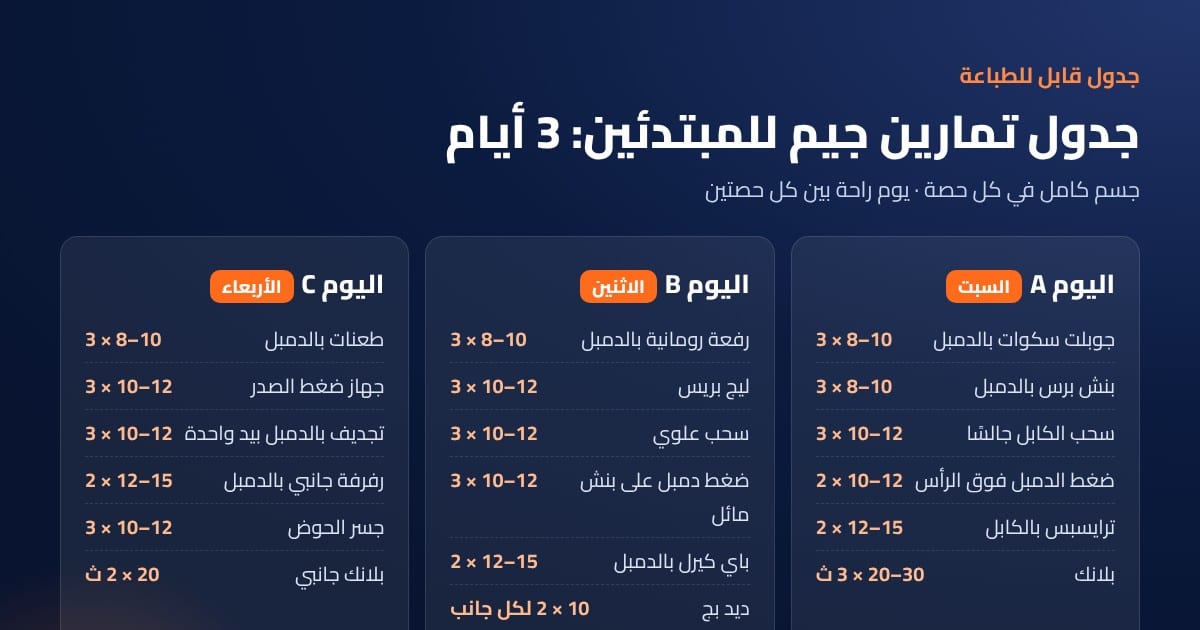
If you don't know where to start, a simple training schedule can help you organize your time and avoid training at random. This is a template for your first week only; for the full program with a 4-week weight progression plan, see our 3-day beginner gym workout schedule.
The following table is an example of a program that trains the whole body three times a week. You can do it on non-consecutive days, such as Saturday, Monday, and Wednesday.
Day 1: Building a strength foundation
| Exercise | Sets | Reps |
|---|---|---|
| Leg Press | 2 | 10–12 |
| Chest Press | 2 | 8–12 |
| Lat Pulldown | 2 | 8–12 |
| Leg Curl | 2 | 10–12 |
| Dead Bug | 2 | 8–10 per side |
Day 2: Improving form and control
| Exercise | Sets | Reps |
|---|---|---|
| Goblet Squat or box squat | 2 | 8–12 |
| Seated Row | 2 | 8–12 |
| Chest Press | 2 | 8–12 |
| Glute Bridge | 2 | 10–15 |
| Plank | 2 | 15–30 seconds |
Day 3: Full-body training
| Exercise | Sets | Reps |
|---|---|---|
| Leg Press | 2 | 10–12 |
| Lat Pulldown | 2 | 8–12 |
| Shoulder Press | 2 | 8–12 |
| Leg Curl | 2 | 10–12 |
| Dead Bug | 2 | 8–10 per side |
Important guidelines for following the schedule:
- The numbers listed are a starting point you can adjust to your ability and fitness level.
- Choose a weight that lets you complete the reps with correct technique while still being able to do a few extra reps.
- Rest one to three minutes between sets, depending on how hard the exercise is and how much recovery you need.
- Increase the weights gradually once you can complete the target reps relatively easily while keeping correct form.
- If you feel sharp or worsening pain in your joints or bones, stop the exercise causing the pain and get a proper evaluation when needed.
This schedule is a general example for beginners, not a mandatory program that suits everyone. It can be adjusted based on your goals, previous injuries, and mobility. And if you're going to start at home before the gym, begin with our 4-week home workout plan for beginners.
Your First Day at the Gym: What to Do From the Moment You Walk In
Your first day at the gym can feel confusing, especially if you've never used gym machines before. But breaking the session into clear steps makes the experience easier and more organized.
Checklist: before you go to the gym
- Wear comfortable workout clothes and suitable shoes.
- Bring a water bottle and a towel if you need them.
- Eat a suitable meal early enough before your workout that you feel comfortable while moving.
- Tell the trainer about any previous injury or health problem that could affect which exercises you choose.
Step 1: Warm up and get to know the machines
Start with a light warm-up for five to ten minutes, then learn where the main machines are. Ask the trainer to explain how to adjust the machine, its seat, and its handles, and how to perform the movement correctly.
Step 2: Do a set of basic exercises
Dedicate the main part of the session to four or five exercises that target different muscle groups. You can start with one or two sets per exercise, depending on your ability and the program's instructions.
You don't need to reach muscle failure on your first day, and you shouldn't make extreme exhaustion your measure of a successful session.
Step 3: Finish the workout and log your results
After you finish your exercises, you can gradually lower the intensity if you need to, then log the exercises, weights, and reps you used.
This log will help you know what you've accomplished and avoid guessing when you come back to the gym next time. You can log on paper, or in the FTW Fitness app, which saves your weights and sets your rest timer between sets.

The goal of your first day isn't to lift heavy weights, but to learn the basics and leave with a clear plan you can stick with.
Tips for Gym Beginners to Avoid Common Mistakes
Knowing the common mistakes helps you improve your training experience and lowers your risk of injury.
1. Avoid increasing weights too fast
Using weights heavier than you can handle can make you lose control of the movement. Start with a suitable load and increase it gradually once you can complete the required reps with correct form [2].
2. Give your body time to recover
You don't need to train at maximum intensity every day. Your body needs adequate recovery periods, especially in the first weeks of training.
3. Don't copy other people's programs without evaluating them
A training program may suit an advanced lifter but not a beginner with different goals or abilities. Choose your program based on your level, available time, and individual needs.
4. Don't rely on cardio alone
Aerobic exercise, such as brisk walking and cycling, helps improve heart health and fitness. But resistance training is also important for building and maintaining muscle, so combining both types is a good option for many people.
5. Don't rely on the scale alone to judge your results
Body weight is affected by water, glycogen stores, and the contents of your digestive tract, as well as fat and muscle. That's why it's useful to track your strength and performance, and you can also track your body measurements when needed.
6. Don't ignore unusual pain
Temporary muscle soreness can appear after training, but sharp or worsening pain, or pain accompanied by obvious swelling, shouldn't be ignored. Stop the exercise causing the pain, and get a medical evaluation if the pain is severe or persistent.
When Do Beginners See Gym Results?
How quickly results appear varies from person to person, depending on your starting fitness level, consistency in training, nutrition, sleep, and health factors.
You may notice improvements in strength and movement control within the first few weeks, even before clear changes in how your body looks.
Noticeable changes in muscle mass or body fat, however, usually take a longer period of sticking with training and proper nutrition.
If your goal is fat loss, organizing your nutrition and creating a suitable calorie deficit will help you achieve it. If you want to build muscle, make sure to do resistance training regularly and eat enough protein and energy.
Don't let slow results at the beginning become a reason to stop. Sustainable progress depends more on consistency than on temporary motivation.
Frequently Asked Questions
Many people ask: how do I start at the gym with no experience at all?
Yes, you can start even if you have no previous training experience. Begin by learning the basic movements and how to use the machines correctly, choose weights that suit your ability, then increase your training intensity gradually.
How many days a week should I train at the start of my journey?
Training two or three days a week can be a good starting point for many beginners. The right number depends on your goals, available time, and ability to recover.
Do I have to use heavy weights to build muscle?
No, building muscle isn't limited to heavy weights. Different loads can help build muscle when the training effort is adequate [2] and the training volume is sufficient, with the load increased gradually according to your ability.
Should I do cardio before resistance training?
You don't need a long cardio session before resistance training. A short warm-up is usually enough, and you can do cardio after resistance training or in a separate session, depending on your goals and schedule.
I don't know where to start at the gym. What should I do?
Start by defining your goal, choose a simple training schedule, learn to perform the basic exercises, and track your progress. If you're not sure how to use a machine, ask a qualified trainer for help.
The Bottom Line: Start Your Fitness Journey With Simple Steps
If you want to start going to the gym but don't know where to begin, don't wait until you reach a certain fitness level or gain prior experience.
Define your goal, choose exercises that suit your level, learn correct form, and take care of your nutrition, sleep, and recovery. Over time, you'll be able to improve your strength and fitness and build healthy habits that stay with you for the long term.
You don't need to be a pro on day one; you need a correct start, a realistic plan, and ongoing commitment. Over time, you'll discover that gym exercises for beginners are easier than you expected.
And if you'd like to know your goal and your starting point before your first day, start with a free body analysis:
Analyze your body for free
And if you want someone to follow up with you every day, the FTW Fitness app for gym enthusiasts builds today's session from your plan, adjusts its intensity based on your recovery score and sleep, and lets you log your weights and exercises.
Download FTW Fitness for free
Sources
- Bull FC, et al. World Health Organization 2020 guidelines on physical activity and sedentary behaviour. British Journal of Sports Medicine, 2020.
- American College of Sports Medicine. Progression Models in Resistance Training for Healthy Adults. Medicine & Science in Sports & Exercise, 2009.
- Hirshkowitz M, et al. National Sleep Foundation's sleep time duration recommendations. Sleep Health, 2015.